
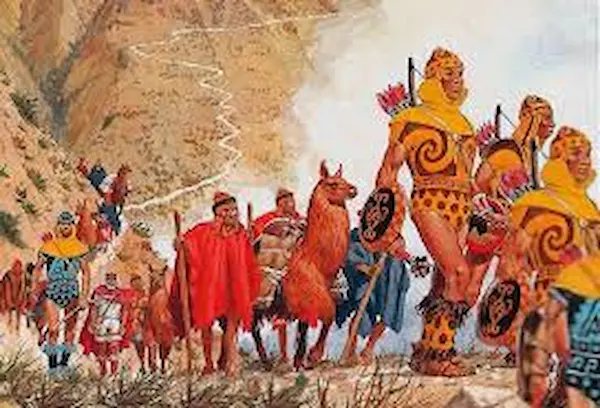
Inca Heritage is more than a memory of an empire; it is a continuous pulse that flows through the landscapes, languages, and customs of the Andes. Though centuries have passed since the height of the Inca civilization, its essence remains visible in the rhythm of rural life, in the values of reciprocity, and in the deep respect for nature. This heritage is not confined to ruins or museums; it lives in gestures, rituals, and the worldview that still unites people and land.
The Inca world was not built solely on power or conquest but on the conviction that harmony among all beings—humans, nature, and the divine—was the foundation of life. Today, Inca Heritage continues to remind us that progress and tradition can coexist when guided by balance and collective purpose.
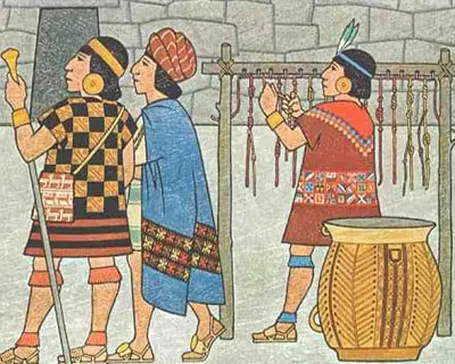
The essence of inca civilization
The greatness of the Inca world cannot be measured by conquest or expansion, but by the depth of understanding that guided its existence. Within every aspect of Inca life —from the way they built their homes to the way they celebrated the harvest— there was a silent conviction that life itself was sacred. What held their civilization together was not merely power, but a philosophy rooted in balance. The Incas observed the natural world not as something to be used, but as something to be listened to. Mountains, rivers, animals, and even the wind were seen as teachers, each holding a fragment of wisdom. Through this intimate dialogue with nature, they developed a system of knowledge that was both practical and spiritual, capable of sustaining communities while nurturing respect for the environment.
A culture built on harmony and knowledge
The Inca civilization emerged as one of the most organized and advanced societies in pre-Columbian America. Its strength did not lie only in architecture or agriculture, but in its vision of unity. Every community was part of a vast structure of cooperation, where the well-being of one was tied to the well-being of all. This principle of reciprocity—known as ayni—was the moral foundation of Inca Heritage, shaping not just economy and labor, but also emotional and spiritual relationships.
Knowledge in the Inca world was practical yet sacred. Observation of the stars, the movement of the seasons, and the fertility of the soil guided not only agriculture but also the calendar of rituals. Learning was transmitted through experience, song, and symbol, ensuring that wisdom remained alive across generations.
The Inca Vision of the world and nature
Inca thought perceived the universe as an interconnected whole. The world was divided into three planes the upper world (Hanan Pacha), the world of the living (Kay Pacha), and the inner world (Ukhu Pacha) each governed by complementary forces. Humans were a bridge among them, with the responsibility to maintain balance.
This worldview continues to define Andean culture today. To honor the earth, to celebrate the cycles of life, and to live with gratitude are all expressions of Inca Heritage that have endured through centuries.
The social and political structure of the Incas
“The Inca Empire was one of the most advanced civilizations in pre-Columbian America, with a highly organized social and political system that supported its vast empire. The Incas implemented a complex hierarchy that not only structured society but also ensured effective governance and control over their expansive territory. From the ruling Sapa Inca to the various classes of commoners, the structure shaped daily life, economic systems, and even spiritual practices, creating a powerful and enduring legacy that still fascinates us today.”
Community and reciprocity
The social foundation of Inca life was the ayllu, a system of kinship that combined family, territory, and shared work. Each ayllu was autonomous yet interdependent, embodying the collective spirit of Inca Heritage. Work was not seen as a burden but as a contribution to harmony.
Reciprocity governed all exchanges. When one family harvested crops, others helped; when a house was built, the community gathered. In return, everyone benefited in times of need. This system forged a sense of belonging that still defines rural Andean communities.
Organization, leadership, and collective purpose
The Incas developed one of the most efficient administrative systems of their time. Leaders, known as curacas, represented their ayllus before higher authorities, and the Sapa Inca—considered the son of the Sun—embodied both power and responsibility. However, leadership was not purely hierarchical; it was guided by a moral code: ama sua, ama llulla, ama quella (do not steal, do not lie, do not be lazy).
This ethical triad remains a cornerstone of Inca Heritage, illustrating how social order and moral integrity were inseparable.
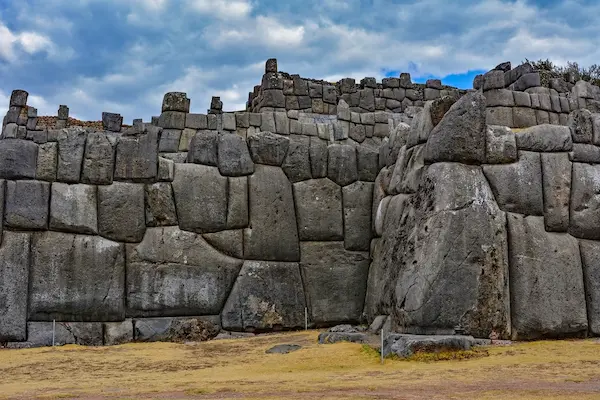
Inca heritage in architecture and engineering
Inca heritage in architecture and engineering is a testament to the ingenuity and precision of one of the greatest ancient civilizations. The Incas were masters of creating structures that not only endured the test of time but also harmonized with the natural environment. Their architectural feats, such as the iconic Machu Picchu and the intricate networks of roads and agricultural terraces, showcase advanced engineering techniques that were ahead of their time. The use of stonework without mortar, their ability to design earthquake-resistant structures, and their sophisticated water management systems are just a few examples of how Inca architectural and engineering knowledge continues to inspire modern construction and design.
Mastery of stone: From cusco to Machu Picchu
Few expressions of human creativity are as awe-inspiring as Inca architecture. Cities like Cusco, Ollantaytambo, and Machu Picchu reveal a mastery of stone unmatched in precision and endurance. Stones were carved to fit perfectly without mortar, able to resist earthquakes and centuries of wear.
But these constructions were more than technical feats; they were acts of devotion. The Incas built in dialogue with the mountains, rivers, and stars, acknowledging nature as a living participant. Every stone was placed not only for function but for meaning.
The art of building in harmony with the land
Unlike many civilizations that sought to dominate their environment, the Incas built with the land, not against it. Terraces followed the natural contours of mountains, preventing erosion and enhancing fertility. Water channels mirrored the flow of rivers, sustaining life without disrupting ecosystems.
This ecological wisdom, central to Inca Heritage, offers a lesson of sustainability that remains relevant today.
Symbolism in inca constructions
Inca architecture carried symbolic codes that reflected spiritual beliefs. The alignment of temples with solstices, the use of trapezoidal doors for stability, and the orientation toward sacred peaks (Apus) were not coincidences. Each element was a dialogue with the cosmos.
Even today, many Andean families orient their homes and altars following ancestral patterns, preserving the spiritual geometry of Inca Heritage.
You might be interested: Unforgettable Unique Travel Experiences in Peru
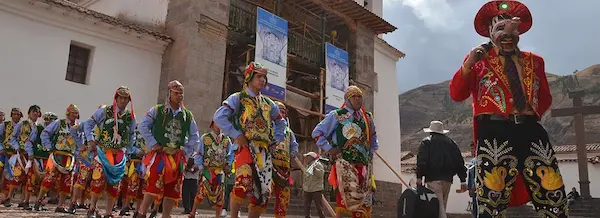
Spiritual dimensions of inca heritage
The spiritual dimensions of Inca heritage are deeply rooted in their worldview, where religion and nature were inseparable. The Incas believed in a divine order, with the Sun God, Inti, at the center of their spiritual practices, symbolizing life, fertility, and governance. Sacred rituals, ceremonies, and offerings were performed to honor the gods and maintain harmony between humanity and the natural world. The Inca’s spiritual connection to the land, their ancestors, and the cosmos continues to resonate in modern Peru, where indigenous communities still practice rituals and festivals that honor these ancient beliefs, keeping the spiritual essence of Inca heritage alive.
The Sacred Connection Between Humans and the Earth
The Incas considered the earth a mother Pachamama whose generosity sustained all forms of life. Offerings, rituals, and festivals were ways to express gratitude rather than request favors.
This reciprocity with nature is one of the most profound teachings of Inca Heritage: to live in mutual care with the planet rather than in dominance.
Rituals, Festivals, and the andean calendar
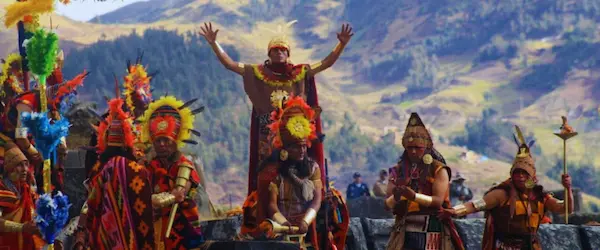
The Inca calendar followed the rhythm of the sun and the agricultural cycles. Each month had a purpose linked to sowing, harvest, or renewal. The Inti Raymi, celebration of the Sun, marked the return of light during the winter solstice, symbolizing rebirth and continuity.
Such ceremonies are still performed today in the highlands, where communities gather not as a reenactment but as a continuation of life’s sacred rhythm.
The Concept of Pachamama and Cosmic balance
Pachamama embodies both creation and sustenance. To honor her is to recognize interdependence. Offerings of coca leaves, chicha, or flowers are expressions of that respect. In this way, spirituality in Inca Heritage is not dogma but relationship a constant dialogue between the human heart and the earth’s spirit.
You might be interested: Festivals in Peru September: Celebrate Culture and Tradition
Language, art, and knowledge transmission
Language, art, and the transmission of knowledge were central to the Inca Empire, reflecting a sophisticated culture that valued education, communication, and creativity. The Incas developed an intricate system of communication through quipus (knot records) and oral traditions, passing down stories, knowledge, and history through generations. Their art, from textiles to pottery, was not just decorative but also symbolic, carrying cultural significance. Today, the transmission of Inca knowledge continues to influence modern Peruvian culture, with indigenous communities preserving these traditions through language and artistic practices, ensuring the enduring legacy of the Inca civilization.
Quechua as the Language of Continuity
Quechua, the language of the Incas, continues to be spoken by millions across South America. It carries within its words the worldview of balance, respect, and affection that defines Inca Heritage.
Its expressions, often poetic and metaphorical, reflect an intimate connection with nature. To speak Quechua is to preserve a way of seeing the world where mountains are ancestors and rivers are guardians.
Weaving and symbolism in andean textiles
Textiles were among the most sophisticated art forms of the Incas. Patterns were not decorative but communicative; they told stories of lineage, territory, and belief. Colors carried meaning red for strength, yellow for the sun, black for fertility.
In many Andean villages, weaving continues as a daily practice, where hands repeat ancient gestures that bind the past to the present.
The Inca sense of education and oral tradition
Inca education was not institutional but communal. Elders transmitted wisdom through storytelling, music, and ritual. Knowledge was measured not by accumulation but by usefulness to the collective.
This approach to learning remains a living aspect of Inca Heritage, teaching that knowledge finds its highest value when it serves others.
You might be interested: October in Peru: A Month of Faith, Color, and Tradition
The continuity of Inca heritage in modern Peru
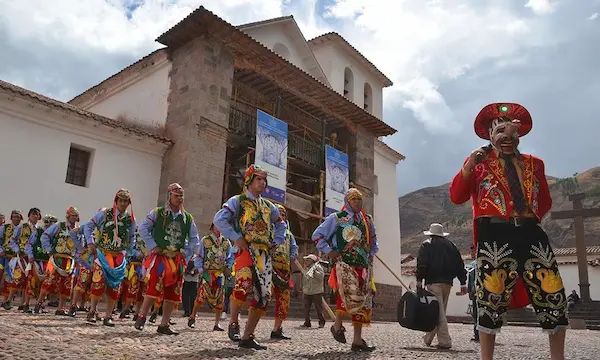
The Inca legacy is not only a historical curiosity but a living, breathing part of modern Peruvian identity. From ancient rituals to traditional farming practices, the influence of the Inca Empire continues to shape the daily lives of many Peruvians. Indigenous communities across the country still honor their Inca ancestors through their language, customs, and spiritual beliefs, blending centuries-old traditions with contemporary life. The continuity of Inca heritage in modern Peru is a testament to the resilience and enduring spirit of a civilization that remains deeply woven into the fabric of the nation’s culture and identity.
The presence of Inca values in daily life
The Andean sense of cooperation, respect, and balance remains alive in contemporary Peru. Marketplaces, community workdays (faenas), and family rituals still echo the spirit of reciprocity that sustained Inca civilization.
These practices remind us that heritage is not frozen in time but evolves with each generation that honors it.
Traditions that survive in the andes
In the highlands, festivals blend ancient and modern elements, creating a continuum between worlds. Music, dance, and ritual carry meanings that transcend religion or nationality. They are expressions of belonging to the land, to ancestors, to life itself.
Through these traditions, Inca Heritage remains a living thread woven into the cultural fabric of modern Peru.
The modern expression of ancestral knowledge
In fields like agriculture, medicine, and art, Andean communities continue to apply ancestral knowledge. The cultivation of native crops, the use of medicinal plants, and the crafting of ceramics reflect a wisdom that harmonizes innovation and tradition.
This coexistence between old and new embodies the vitality of Inca Heritage in contemporary times.
The global meaning of Inca heritage
“The Inca heritage is more than just a remarkable chapter in South American history; it has a profound global significance. Spanning across architecture, agriculture, art, and social organization, the Inca civilization left a lasting impact on modern society. From their advanced agricultural techniques to the architectural marvels like Machu Picchu, the influence of Inca innovation continues to inspire cultures around the world. Exploring the global meaning of Inca heritage allows us to appreciate the timeless wisdom and resilience of a civilization that has shaped not only Peru but the broader world in unexpected ways.”
Lessons from an ancient civilization
The legacy of the Incas extends beyond borders. Their emphasis on cooperation, respect for nature, and moral clarity offers timeless guidance. In a world marked by imbalance, Inca Heritage invites reflection on coexistence and shared responsibility.
The inca view of sustainability and balance
Sustainability was not an ideology but a way of life. The Incas understood that human survival depended on ecological equilibrium. Their agricultural terraces, irrigation systems, and rituals were all designed to sustain harmony rather than exploitation.
Humanity’s dialogue with its origins
Inca Heritage reminds us that civilization’s progress should not distance humanity from its roots. The wisdom of the Andes teaches that the future depends on remembering how to live well with the earth, not at its expense.
A civilization that never ended
The Inca Empire may have fallen centuries ago, but its spirit endures in the hearts and habits of millions. Inca Heritage is not an echo of history it is a living presence that continues to shape thought, identity, and connection to the world.
Its essence lies in balance: between humanity and nature, knowledge and humility, memory and renewal. To recognize this heritage is to understand that civilizations never truly vanish when their principles remain alive.
In every ritual, every word of Quechua, every terrace carved into the mountain, the Inca spirit persists silent yet powerful, ancient yet enduring. The legacy of an ancient civilization continues to breathe, reminding humanity that harmony is not a relic of the past, but a path toward the future
