
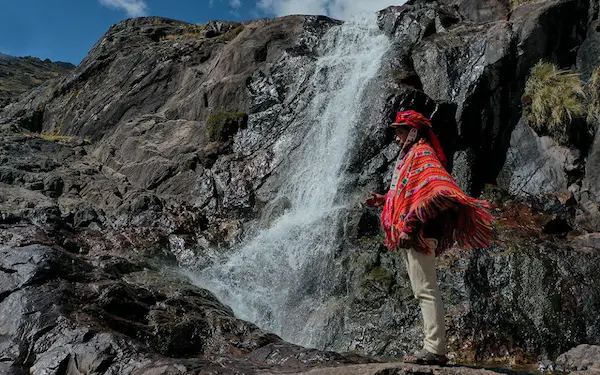
In the Andes of Peru, every step feels like a conversation with time. Here, travel experiences are not only about places they are about encounters. Mountains, valleys, and villages reveal stories that live beyond history, shaping a culture rooted in harmony with the earth. To journey through these heights is to sense how nature and tradition intertwine, how silence carries meaning, and how each horizon invites reflection.
In these lands, travel becomes a way of understanding connection with others, with the landscape, and with oneself. The Andes are not simply crossed; they are felt, learned, and remembered.
You might be interested: October in Peru: A Month of Faith, Color, and Tradition
The Soul of the Andes: Where Landscapes Shape Identity
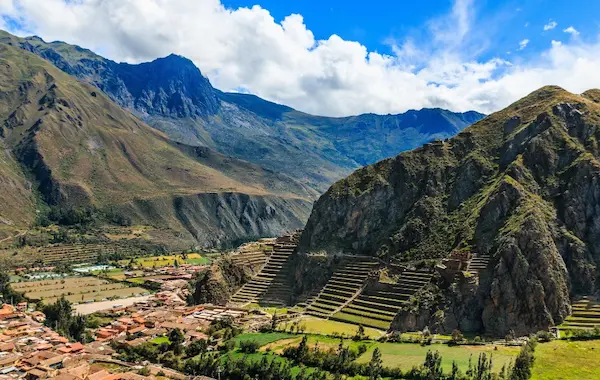
There is a moment, somewhere between the silence of the mountains and the whisper of the wind, when the Andes reveal what words can barely describe. In Peru, the Andes are not only geography; they are presence, rhythm, and breath. They stretch like an endless spine, connecting valleys and highlands, linking generations that have learned to live in dialogue with the land. Each stone, each terrace, and each village carries the memory of those who came before, shaping the identity of a people that continues to find meaning in balance.
To travel through the Andes of Peru is to understand that landscapes are not just places to observe they are living expressions of coexistence. The peaks of Cusco rise with solemn calm, while the valleys of the Sacred Valley pulse with quiet fertility. The light changes at every hour, transforming color into emotion. Morning reveals silver tones over the rivers; afternoon burns with copper reflections on adobe walls. The Andes speak through contrast, and in that contrast, identity is born.
From the high altitudes of Puno to the deep valleys of Arequipa, travel experiences become a bridge between nature and culture. The land dictates the rhythm of life: sowing, harvesting, and celebrating follow the same cycle of the sun. To witness this harmony is to recognize how deeply the Andes shape those who inhabit them not through dominance, but through understanding. Here, existence depends on listening, on interpreting the language of the earth.
Those who travel through these regions often sense that every step carries both the weight and lightness of time. The Andes teach patience. They show that identity is not a static concept, but a river that carves itself through centuries of persistence. It is not only about seeing Peru; it is about feeling how Peru has been shaped by the silent dialogue between human hands and sacred mountains.
Ancient Footprints, Living Traditions
The Andes are more than traces of a glorious past they are a present that breathes through tradition. In the heights of Cusco, weaving continues as it did hundreds of years ago. Women spin wool with fingers that seem to follow inherited patterns of motion. The colors they choose are not random; they are coded expressions of their environment, beliefs, and emotions. A red thread may evoke the soil after rain, a yellow one the morning sun reflected in cornfields. In every woven piece, the Andes record their history.
The continuity of ancestral wisdom
Ancestral knowledge flows quietly in daily routines. It lives in the way fields are tilled, in the offerings made to Pachamama, and in the respectful way water is used. For Andean communities, life is an ongoing conversation with nature a constant exchange between giving and receiving. The idea of balance, or ayni, remains the foundation of social and environmental harmony. It is not a concept to be learned; it is a way of living that reveals itself through observation and participation.
Such continuity gives cultural travel experiences in Peru a depth rarely found elsewhere. Each village, each ritual, and each handmade craft reflects not a reconstruction of the past, but the living continuity of it. The traveler who walks through the terraces of Pisac or the streets of Chinchero doesn’t encounter ruins they encounter living evidence of endurance. Ancient wisdom is not kept in museums; it breathes through people who carry memory in their work, in their songs, and in the way they greet the dawn.
The rhythm of festivities and community life
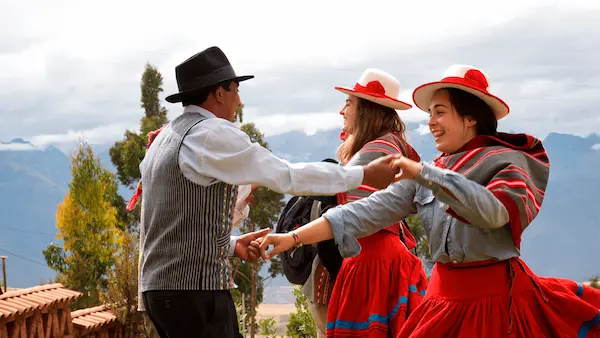
Festivities are the pulse of the Andes. They are not performances, but expressions of gratitude and belonging. When communities gather to celebrate Inti Raymi, the Festival of the Sun, or the feast of the Virgin of Candelaria in Puno, the entire landscape seems to vibrate with energy. Music, color, and movement blend with faith and reciprocity. Each celebration mirrors a deep understanding of cycles of sowing and harvest, of life and death, of silence and rebirth.
The sense of community transcends the event itself. In the Andes, joy is collective, and so is sorrow. The people dance not for spectacle but for connection. The steps, costumes, and songs repeat year after year because they reaffirm identity. They remind each participant that to belong is not to possess a place, but to share its rhythm. In those moments, travel experiences in Peru transcend tourism. They become encounters with authenticity, with endurance, and with the quiet beauty of a people who celebrate life as continuity.
You might be interested: Ancient Traditions of Peru: Rituals, Festivals and Legacy
Cultural Travel Experiences in Peru
Culture in the Andes is not confined to temples or archaeological sites; it lives in gestures, sounds, and silences. It is expressed in the way people greet, in the offerings placed on the ground before a meal, and in the music that rises from quenas and charangos at dusk. Every aspect of Andean culture has meaning, and to experience it is to enter a world where nothing is accidental.
Art, textiles, and the silent language of colors
The art of the Andes is both personal and collective. It tells stories that cannot be fully translated, yet can be deeply understood through emotion. In the region of Ayacucho, artisans shape retablos that portray daily life, faith, and dreams. Each figure carved in wood or molded from clay carries the pulse of the artisan’s hands a testimony of continuity and imagination. These are not mere objects; they are fragments of a worldview that honors simplicity as depth.
Weaving communities in Chinchero or Taquile Island demonstrate how identity can be woven thread by thread. Patterns are never arbitrary; they encode history. A single textile can recount migration, fertility, or protection. Through colors and symmetry, Andean artisans create more than beauty they preserve philosophy. To understand these works is to glimpse a silent dialogue between generations, one that speaks not of commerce but of belonging.
The ritual of food and the memory of the earth
Food in the Andes is not just sustenance; it is remembrance. The diversity of ingredients from quinoa and tarwi to potatoes cultivated in hundreds of varieties reflects the landscape’s generosity. Each ingredient carries a story. Potatoes, for instance, are not simply crops; they are heritage. Their cultivation follows lunar cycles and ancestral knowledge of soil, humidity, and altitude.
In markets like those of Pisac or Urubamba, the scent of herbs mingles with the sound of conversations in Quechua. Meals are shared in community, reaffirming the link between humans and the earth. A traditional pachamanca, cooked beneath hot stones, symbolizes that union: the earth nourishes, and people reciprocate with gratitude. The traveler who witnesses or participates in these moments understands that food here is a language of identity, an act of respect toward what sustains life.
Solo Travel Experiences: Finding Connection Through Solitude
To travel alone through the Andes is to learn that solitude is not isolation. The vastness of the Peruvian highlands transforms silence into dialogue. The horizon is wide, yet it doesn’t feel empty. It offers space to listen to the wind, to the bells of distant llamas, to the heartbeat that syncs with altitude. Many who embark on solo travel experiences in Peru discover that solitude in these lands reveals presence more than absence.
The calm of the highlands
In regions such as Huaraz or the Colca Valley, the mountains become companions. They stand immovable, yet they seem to respond to every change of light, to every shift of cloud. Their stillness inspires reflection. The traveler learns to measure time not by the clock but by the sun’s position, by the rhythm of footsteps. The simplicity of the highlands teaches awareness. Here, one’s pace slows naturally; it adapts to the terrain, to the thin air, to the inner dialogue that surfaces when words no longer suffice.
The calm found in the Andes is not merely external. It grows from within. In the quietness of trails that lead to forgotten villages or serene lakes like Humantay, solitude becomes revelation. The absence of noise opens a new kind of communication one that doesn’t rely on language but on attention. This is where experiences travel beyond sightseeing; they become a way of aligning thought, body, and place.
Listening to silence as a form of encounter
Silence in the Andes is alive. It hums through valleys, resonates off cliffs, and fills the space between one’s thoughts. For the solo traveler, this silence becomes a mirror. It reflects not only the outer vastness but the inner landscape as well. The mind, often restless, begins to settle. One starts noticing the smallest details: the way condensation forms on grass at dawn, the sound of a condor’s wings slicing the air, the warmth of a sunbeam after a cold night.
In that stillness, the concept of travel transforms. It is no longer about reaching destinations but about inhabiting them fully, even briefly. To travel alone in the Andes is to understand connection in its purest form not as an exchange of words, but as a mutual recognition between human and mountain. Solitude here does not distance; it unites.
You might be interested: Traditions of Peru: Culture, Celebrations and History

Nature as a Teacher: Learning Through Travel Experiences
There are journeys that do not end when the road does. In the Andes of Peru, nature becomes a constant guide, revealing lessons that are simple yet profound. The peaks rise like guardians of time, and the rivers carve pathways that mirror the flow of thought. Every traveler who lingers long enough learns that the Andean landscape teaches without words through patience, repetition, and balance.
The altitude, at first demanding, soon becomes a rhythm of breath. The thin air forces the body to slow down, to adjust, to listen. In this stillness, learning happens quietly. To walk through the Sacred Valley or the trails around Ausangate is to witness coexistence between human and mountain. The people who live here know that the land provides, but only if treated with respect. The terraces that curve along steep hillsides are not merely agricultural techniques; they are expressions of dialogue between necessity and care.
The sacred dialogue between humans and the Apus
For centuries, the Andean people have regarded the mountains the Apus as protectors. Each peak carries a spirit, each name a story. To travel through these lands with open perception is to sense this dialogue still alive. Offerings of coca leaves, drops of chicha, or the simple gesture of silence at dawn are not rituals for spectacle. They are ways of acknowledging the presence of the sacred in the ordinary.
In regions like Cusco or Puno, the concept of spirituality does not separate the divine from the everyday. The mountain that towers above a village is both a physical landmark and a being that listens. This vision of the world, woven into daily life, turns travel experiences into moments of revelation. The traveler who pauses before a snow-covered summit may not know the ancient language, yet often feels the same reverence that generations have felt the awareness of standing before something greater than oneself.
Walking as meditation
To walk in the Andes is to meditate in motion. The uneven trails, the constant rise and descent, require attention not only to the path but to the rhythm of breathing. Over time, steps become steady, thoughts align, and awareness sharpens. The act of walking ceases to be a physical effort and turns into contemplation. The sound of boots over gravel, the echo of one’s heartbeat, the vast silence that follows all become part of the same quiet conversation.
The concept of experiences travel finds its essence here. Each route whether toward the salt mines of Maras, the remote paths of Huarochirí, or the shores of Lake Titicaca invites a renewed perception of time. The Andes teach that progress is not measured in speed, but in attention. Every pause, every breath, every glance toward the horizon becomes a way of understanding movement as reflection. The journey transforms from transit to presence.
Experiences Travel Beyond Time: The Andes as a Living Memory
In the Andes, time does not flow in a straight line. It circles back, connecting what was with what continues to be. The past is not gone; it lingers in songs, in architecture, in gestures passed from one generation to another. For those who travel through Peru’s highlands, the sensation of walking through history is constant not as a distant memory, but as something still alive.
The villages along ancient routes preserve traces of civilizations that built harmony rather than conquest. Stone paths that once connected communities remain visible, guiding today’s travelers through valleys that echo with centuries of footsteps. The presence of the Inca Trail, for example, is not only a reminder of history; it is a living bridge between worlds. The stones that support each step have seen empires rise and fade, yet the path remains open a metaphor for endurance.
The journey as a return
Every journey in the Andes carries an element of return. It may not lead back to the same place, but it often brings the traveler closer to something familiar within. The rhythm of daily life in the mountains sunrise, work, conversation, sunset creates a sense of grounding that modern routines often obscure. By observing the cycles of nature and community, one begins to perceive that life itself is circular, not linear.
In small villages of Apurímac or Cajamarca, time slows down to the pace of human interaction. People still greet one another in the streets, share meals, and exchange stories that blend myth with memory. The traveler who listens finds continuity in these narratives evidence that history is not a museum piece, but a living conversation. To travel here is to understand that progress and preservation can coexist when guided by respect for the land and its rhythms.
Learning to belong
The Andes have a way of reminding visitors that belonging is not possession. It is participation. To feel part of this landscape is to recognize interdependence between people and soil, between work and celebration, between silence and sound. The sense of belonging emerges naturally when one accepts that the land does not need to be conquered, only understood.
This awareness often arises during moments of stillness: watching clouds drift over terraced fields, hearing children’s laughter mix with the wind, or seeing the first stars appear above the peaks. In those instants, the Andes cease to be a destination and become a teacher. Cultural and solo travel experiences converge here, where connection transcends words. The traveler realizes that the most meaningful encounters often occur without intention, born simply from being present.
The Heart of the Andes: Reflections on Travel and Transformation
To meet the heart of the Andes is to recognize that travel changes more than perspective; it reshapes the way one perceives life itself. In these lands, everything is connected earth, water, air, and spirit. The mountains remind each visitor of endurance, the rivers of persistence, and the communities of the power of simplicity. After days or weeks among these landscapes, travelers often notice that what they carry back is not just memory, but understanding.
Travel experiences in Peru reveal that learning and transformation do not always come from discovery, but from recognition. The Andes do not ask to be admired; they invite awareness. The people who inhabit them embody this balance: they work with the earth rather than against it, celebrate cycles instead of endings, and find beauty in continuity. To witness this harmony is to see how culture can exist without separation from nature how identity can grow from humility, not dominance.
Solitude, too, becomes part of the lesson. The single traveler walking through highland paths understands that being alone does not mean being disconnected. On the contrary, solitude here deepens connection. The vastness of the mountains reflects the vastness within. Each experience whether cultural, communal, or solitary leads back to the same truth: the Andes hold a mirror to the essence of what it means to be human.
In the end, the journey through the Andes is not a passage across a landscape but through a living consciousness. The mountains, valleys, and people form a single heartbeat one that pulses beyond time, beyond words, beyond the limits of what travel usually represents. Peru, in its Andean spirit, reminds us that every experience of travel is an experience of becoming: a dialogue between what we see and what we are willing to feel.
conclusion
The Andes remain, steadfast and eternal, yet always changing. Their silence teaches the art of listening; their vastness teaches humility. Those who have walked their paths often speak of returning, though not always in body. Something of the mountains stays within the patience of stone, the gentleness of dawn, the gratitude of coexistence.
In Peru, travel experiences are not journeys to reach an end, but invitations to continue. The road may fade behind, but the encounter endures quiet, timeless, and alive.
