

Learning about the Incas is a crucial component of any trip, whether you’re planning a trip to Peru or are just interested in ancient cultures. The hues of traditional attire, the cadence of festivals, and the revered ruins that adorn the Andes are all reminders that their culture is more than just history. These 21 facts about inca culture provide a glimpse into a society where engineering, spirituality, and nature all came together in breathtaking ways.
This blog will increase your admiration and arouse your sense of wonder, whether you’re getting ready to visit Machu Picchu or are simply interested in the people who once governed this magnificent terrain. Because one must first comprehend the Inca tradition in order to comprehend Peru.
What makes Inca culture unique?
The Incas built an empire without a written language, iron tools, or wheeled vehicles. Yet, they created some of the most impressive structures and social systems ever seen in pre-Columbian America. Their way of life was deeply spiritual, and their ability to adapt to the challenging Andean environment showcased incredible ingenuity and resilience.
What truly sets the Incas apart is their ability to govern vast and diverse territories through cooperation, spirituality, and engineering brilliance. Their cultural legacy blends harmony with nature, strong social bonds, and a cosmology that continues to shape Andean identity today.
You might be interested: Peruvian Pisco, all about this drink

1. The Inca Empire was the largest in pre-Columbian America
At its height, the Inca Empire stretched over 2 million square kilometers, from Colombia to Chile. Its capital was Cusco, considered the “navel of the world.” The empire was so vast that it encompassed diverse landscapes, from coastal deserts to high mountain ranges.
This immense reach was achieved through conquest, diplomacy, and a network of roads and administrators that helped maintain order across diverse regions and cultures. The Incas integrated newly conquered peoples through language, religion, and infrastructure, allowing them to govern efficiently and promote unity despite diversity.
2. Quechua was the official language of the Incas
Quechua, still spoken today, was the lingua franca of the empire. It unified diverse communities across the Andes and facilitated communication between people of different ethnic backgrounds.
The Incas used Quechua for administration, religion, and oral transmission of knowledge. The widespread use of Quechua allowed the state to manage taxes, laws, and military orders throughout the empire, strengthening central authority.
3. The Incas did not use money
Trade and economy were based on reciprocity and bartering. Labor was often exchanged for goods and services, creating a system of mutual dependence and collective responsibility.
This system, known as the mita, emphasized communal work and ensured that everyone’s basic needs were met without currency. It was enforced by the state and required citizens to contribute labor to infrastructure, agriculture, or military service in exchange for protection and resources.
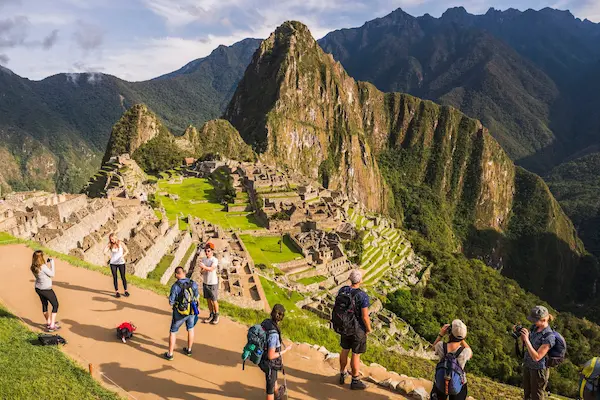
4. Machu Picchu was never discovered by the Spanish
Hidden in the mountains, Machu Picchu remained untouched during the Spanish conquest and was rediscovered in 1911 by Hiram Bingham. It is one of the most iconic examples of Inca architectural mastery.
Its isolated location likely protected it from looters, allowing this magnificent citadel to survive nearly intact through the centuries. Its precise stonework, spiritual alignment, and harmonious integration with the surrounding environment exemplify Inca values and technological prowess.
5. They had no written language, but used quipus
Quipus were bundles of knotted cords used to record information such as census data and taxes. Each color, knot type, and cord placement represented different values and categories.
The quipu system was highly organized and interpreted by trained officials known as quipucamayoc. It allowed the Incas to collect data from far regions and make decisions based on quantifiable records an achievement without alphabetic writing.
6. Inca roads covered over 40,000 kilometers
If you’re interested in discovering these paths today, a Travel agency Peru can guide you through surviving portions of the Qhapaq Ñan, allowing you to walk the same trails the Incas once used to connect their vast empire.The Qhapaq Ñan allowed not only military movement but also facilitated economic exchange and cultural integration. The system included tambos (rest stations) and administrative checkpoints, enabling communication between regions in a matter of days.
7. The Sapa Inca was considered a son of the sun
The emperor was seen as divine, the living representation of Inti, the sun god. His authority was both political and religious, giving him absolute power over the empire. Among the most revealing facts about Inca culture is this fusion of spirituality and leadership, which established the emperor not just as a ruler, but as a sacred figure.
The Sapa Inca was worshipped and treated with the highest reverence. His word was law, and even after death, mummified emperors were honored with rituals and included in political decisions through ceremonial consultation. This level of devotion illustrates the profound connection between faith, governance, and ancestral veneration in Inca society. and treated with the highest reverence. His word was law, and even after death, mummified emperors were honored with rituals and included in political decisions through ceremonial consultation..

8. Agriculture was advanced with terraces and irrigation
The Incas used andenes (terraces) to farm on steep mountain slopes and developed advanced irrigation systems. These innovations maximized land use and conserved water.
They also created microclimates through terrace farming, allowing them to grow diverse crops at different elevations. Their engineering ensured food security in a region with harsh and unpredictable climates.
9. The Inca calendar was based on the sun and moon
It guided agricultural and religious activities, with key celebrations aligned with solstices and equinoxes. The calendar helped maintain order in planting and harvest seasons, offering insight into how the Incas harmonized their lives with the cosmos. Among the most intriguing facts about Inca culture is how they connected timekeeping with spirituality.
The calendar combined astronomy and ritual. Priests used sacred observatories like the Torreón in Machu Picchu to track celestial events, ensuring that ceremonies were performed at cosmologically significant times. This fusion of science and belief reveals how central the sun, moon, and stars were to everyday Inca life. and ritual.
10. Gold was sacred, not a symbol of wealth
Gold was considered the sweat of the sun and used in temples and ceremonies, not for wealth accumulation. Its use was mainly spiritual and decorative in religious contexts.
Golden objects adorned temples like Coricancha in Cusco, which was covered in sheets of gold. The reverence for gold was spiritual it honored Inti, the sun god rather than materialistic.
11. They practiced mummification for nobles
Mummies of important figures were treated as living ancestors, consulted during ceremonies and processions. These ancestors were seen as active members of the community.
They were dressed, fed symbolic meals, and taken out during rituals and public events. The practice emphasized the cyclical nature of life and the importance of lineage and memory.

12. The Inca diet included quinoa, potatoes, and maize
They domesticated hundreds of potato varieties and used freeze-drying techniques like chuño. These methods extended food shelf-life and ensured availability during hard times.
Quinoa, amaranth, and maize were also staples. The variety and nutritional balance of their diet contributed to a healthy population capable of great physical feats and resistance to disease.
13. Cuzco was shaped like a puma, the sacred animal
Urban planning reflected cosmological beliefs. The head of the puma was Sacsayhuamán, a ceremonial fortress built with massive stones.
This zoomorphic design expressed the connection between the state and sacred animals. It demonstrated the Inca ability to integrate religion, astronomy, and politics into city planning.
14. They built earthquake-resistant structures
Inca stonework used polygonal stones that fit perfectly without mortar. Many buildings still stand today despite centuries of seismic activity.
Their ability to construct with such precision allowed structures to move slightly during quakes and then settle back into place. It is one of the reasons their architecture has endured for centuries.
15. The Incas believed in three realms of existence
The upper world (Hanan Pacha), the earthly world (Kay Pacha), and the underworld (Uku Pacha) shaped their spiritual vision. Each realm was associated with different deities and symbols.
This worldview affected everything from temple design to burial practices. The condor, puma, and serpent symbolized each realm, and their balance was key to cosmic harmony.
16. Llamas were essential for transport and wool
Llamas were used to carry goods and were vital to the Inca economy, especially in highland areas. They could transport heavy loads across rough terrain.
They also provided wool for textiles and were considered sacred animals in many Inca rituals. Herding llamas was a respected and strategic profession.
You might be interested: Peru Independence Day: All about the great national holiday
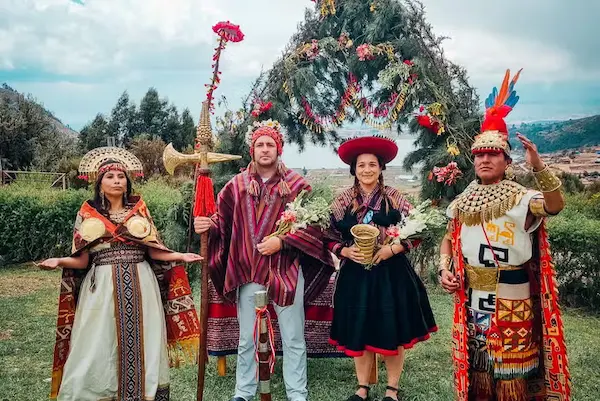
17. Inca marriages were practical and symbolic
Marriages were alliances between families. The ceremony included exchanging sandals and drinking chicha, a fermented corn beverage.
A couple would often live together for a trial year before formalizing the union, showing the Incas’ pragmatic approach. Marriage served social stability and resource distribution.
18. Music and dance were part of every celebration
Traditional instruments like panpipes and drums accompanied agricultural, religious, and military events. Music connected people to their ancestors and the gods, acting as a bridge between daily life and the spiritual world. It was a fundamental part of ceremonies, seasonal festivals, and even state rituals.
Songs preserved oral history and myth. Ceremonial dances expressed cosmic cycles, victories, and gratitude to the earth and deities. These cultural expressions are powerful facts about Inca culture that reveal how art was deeply interwoven with identity, memory, and cosmology in the Inca world. and myth. Ceremonial dances expressed cosmic cycles, victories, and gratitude to the earth and deities.
19. The Inca army was large, disciplined, and fast
Soldiers trained from a young age, and the army used efficient communication via chasquis (runners). War was seen as a way to expand and unify the empire.
The army was organized into units based on age and skill. Officers used colored banners and drums for coordination, showing remarkable military sophistication.
20. The empire fell quickly to a small group of Spaniards
Despite its power, the empire was vulnerable due to civil war, disease, and betrayal, leading to its fall in the 1530s. The clash of cultures proved catastrophic. These final moments are among the most striking facts about Inca culture, revealing how internal strife and external pressures abruptly ended centuries of achievement.
The Spanish took advantage of divisions between Huascar and Atahualpa’s factions. Superior weaponry and new diseases devastated Inca society and led to colonization. Understanding this turning point offers perspective on how quickly even the most sophisticated civilizations can fall and how their legacy endures nonetheless. between Huascar and Atahualpa’s factions. Superior weaponry and new diseases devastated Inca society and led to colonization.
21. The sacred mountains and their spiritual legacy
The Andes Mountains were not only the backdrop for the Inca Empire, but also a central element of their worldview. Considered sacred, many of them were worshipped as apus, or protective spirits. Today, sleeping perched on a mountaintop in a panoramic lodge like Starlodge Cusco allows you to experience up close that mystical connection with nature that the Incas revered.
You might be interested: The mita system: From Inca duty to colonial exploitation

Why these facts about Inca culture still matter today
The Inca Empire may have fallen centuries ago, but its influence continues to shape modern Peru and the broader Andean region in profound ways. These facts about inca culture are more than historical anecdotes they are the foundation of a cultural identity that survives through language, traditions, and worldviews still practiced today.
By understanding and preserving these elements of Inca culture, we not only honor the legacy of a great civilization but also gain insights into sustainability, community values, and resilience. In a globalized world, the enduring relevance of the Incas offers a powerful reminder of how ancient wisdom can inform modern challenges.
What we can learn from the Incas
Examining these 21 facts about inca culture offers us insight into a society that was closely entwined with the natural world, society, and the universe. In addition to building stone walls, the Incas left behind a philosophy that continues to influence the Andes’ character.
Let this information enhance your trip if you intend to travel through Peru. Gaining an understanding of the Incas will enable you to see roots rather than just ruins. Legacies as well as sceneries.The Inca spirit endures whether you’re hiking to historic citadels or enjoying a chicha in a sleepy town. Allow their heritage to direct your interest and interaction as you see Peru as a living reminder of one of the most remarkable civilizations in human history, rather than just as a place to visit. We learn about societal responsibility, reverence for the natural world, and the strength of teamwork from Inca culture. These 21 Inca cultural truths serve as a reminder of the genius of a people whose knowledge endures.
Knowing about the Incas enhances our appreciation of the old world, regardless of whether you’re a history buff, traveler, or student. Their tale is one of tenacity, peace, and lasting influence.
