

One of our greatest prides as Peruvians is our delicious cuisine and elixir, which we offer throughout our country. One of them, and probably the most recognized, is Peruvian pisco, a liquor made from the finest grapes from around the world that drives not only Peruvians crazy, but also every foreigner who visits us, always wanting to take a bottle of pisco home with them to share. Today, we want to dedicate a special post to this wonderful drink that enchants, amazes, and represents Peru.
What is Peruvian Pisco?
Peruvian Pisco is a type of grape brandy distilled from a variety of grapes grown in the coastal valleys of Peru. It is made using an ancient distillation process that has been passed down through generations, with no added sugar or flavoring, which makes it a pure and unaltered spirit. This drink is deeply embedded in Peruvian culture, often enjoyed during meals or celebrations. It is a crucial element in iconic drinks like the Pisco Sour and Pisco Punch.
You might be interested: The mita system: From Inca duty to colonial exploitation

The history of Peruvian Pisco
The story of Peruvian Pisco dates back to the 16th century, when Spanish colonists introduced grapevine cultivation to Peru. This was part of the broader European influence on the Andean region during the colonization process. The Spanish, eager to cultivate their own alcoholic beverages, brought grapevines from Europe to the fertile valleys of Peru. These grapes thrived in the Peruvian soil, particularly in the regions of Ica, Arequipa, and Moquegua, where they are still cultivated today.
By the early 1600s, Pisco began to take shape as a distinct product of the region. The first distillations of Pisco occurred in the Pisco Valley, a fertile area near the coast of Peru, and it wasn’t long before the drink gained popularity. The name Pisco itself is derived from the Quechua word “pisku,” meaning bird, which was also the name of the Pisco Valley, where the drink originated.
The early days of pisco production
Initially, Pisco was produced as a wine brandy, similar to the European grappa or brandy. The early Pisco was made by distilling grape wine, and over time, it evolved into a clear spirit that became a staple in Peruvian households. By the 18th century, Pisco had become the drink of choice for many Peruvians, consumed during celebrations, religious ceremonies, and even in everyday social life.
Interestingly, in the early years, Pisco was often referred to as “aguardiente” or “firewater” because of its potent alcohol content. It was mainly produced by small-scale, artisanal distilleries, using traditional copper pot stills that were passed down through generations. The production process, and the methods used to distill Pisco, were kept secret by producers, and they maintained a family heritage that continued to shape the product for centuries.
The rise of Pisco as a national drink
As Peru gained independence in the 19th century, Pisco began to be associated with Peruvian identity. It wasn’t just a local drink anymore it was now a symbol of Peruvian culture and pride. By the 20th century, Pisco had firmly established itself as the national drink of Peru, with the iconic Pisco Sour emerging as its flagship cocktail. The cocktail, created by Victor Morris in the 1920s, became an international hit, representing the Peruvian spirit in bars and restaurants around the world.
In the mid-20th century, the production of Pisco became more regulated. In 1991, the Peruvian government officially recognized Pisco as a geographical indication, meaning that only Pisco produced in certain regions of Peru could be labeled as such. This step ensured the protection of Pisco’s origin and its distinction from other brandies produced worldwide.
Pisco and its global recognition
In recent years, Peruvian Pisco has gained worldwide recognition for its quality, craftsmanship, and unique flavor profiles. As global interest in craft spirits has surged, Pisco has found its place among high-end liquors like whiskey and tequila. It is now celebrated not only in Peru but also in bars, restaurants, and cocktail lounges across the globe.
The evolution of Peruvian Pisco from a local spirit to an internationally recognized product is a testament to the enduring significance of this drink. It continues to play a central role in Peruvian traditions, whether in the Pisco Sour or as a symbol of national pride. Today, Pisco remains not only an integral part of Peruvian heritage but also a beloved drink around the world.

Types of Peruvian Pisco
Peruvian Pisco is a unique spirit, and there are several distinct types, each offering a different experience. These types vary based on the grape varieties used and the distillation process. Understanding the differences can enhance your appreciation of this iconic Peruvian drink.
Best Peruvian Pisco for Cocktails
Pisco Puro: Pisco Puro is made from a single variety of grapes (such as Quebranta, Italia, Torontel, or Albilla), making it one of the most versatile types of Pisco. Its clean, fresh, and fruity flavor profile makes it the ideal choice for cocktails like the Pisco Sour and Pisco Punch. The smooth finish of Pisco Puro complements the tanginess of lime and the richness of egg whites in the Pisco Sour, while adding a fresh, vibrant note to the tropical flavors of Pisco Punch. This type of Pisco is perfect for those who enjoy bright, crisp cocktails that highlight the essence of the grape.
Acholado Pisco: Acholado Pisco is a blend of several grape varieties, usually combining Quebranta, Italia, and Muscat grapes, among others. The complexity and balanced flavor of Acholado Pisco make it ideal for cocktails that require a deeper, more nuanced flavor. When mixed in drinks like the Pisco Sour or Pisco Tonic, Acholado Pisco provides a well-rounded taste that can stand up to other ingredients like fruit juices, herbs, or syrups. Its richness and depth add a sophisticated twist to your cocktails, perfect for those who enjoy a layered, complex drink.
Best Peruvian Pisco for sipping
Pisco Mosto Verde: Made from partially fermented grape juice, Pisco Mosto Verde has a sweeter and richer taste compared to other types of Pisco. The natural sugars from the unfermented grape juice give it a smooth, fuller mouthfeel, making it a perfect choice for sipping neat or with a slight chill. This luxurious Pisco is often savored slowly to fully appreciate its unique flavor profile, which can include subtle notes of fruits, floral undertones, and a slight grape sweetness. Pisco Mosto Verde is perfect for those who enjoy a more refined, elegant drinking experience.
Pisco Quebranta: Known for its full-bodied and robust flavor, Pisco Quebranta is made from Quebranta grapes, which are the most widely grown grape variety in Peru for Pisco production. It has a distinctive, earthy flavor with a smooth, yet strong finish, making it perfect for those who enjoy a traditional-style Pisco that showcases the depth of the grape’s character. Pisco Quebranta is often best enjoyed neat, allowing the full range of flavors to be appreciated. Its strength and complexity also make it suitable for pairing with strong cheeses or grilled meats.
Differences between Pisco and other spirits
While many spirits like whiskey, rum, and grappa are made from fermented grains or fruits, Peruvian Pisco is unique in that it is distilled directly from fresh grapes. The production of Pisco does not involve the aging process typically used in spirits like whiskey or rum, which means Pisco retains a fresher, fruitier flavor compared to other aged spirits. Unlike grappa, which is often made from grape pomace (the skins, seeds, and stems), Peruvian Pisco is distilled from the fresh, fermented juice of the grape, ensuring a cleaner and purer flavor.
Additionally, Pisco is never aged in wooden barrels, which means it doesn’t absorb the woody, smoky flavors that come with aging in oak. This contributes to Pisco’s crispness and allows the natural grape characteristics to shine through, making it a versatile spirit that can be enjoyed neat, on the rocks, or mixed into cocktails without the influence of aging.
Peruvian Pisco is a versatile and unique spirit, offering something for every type of drinker. Whether you prefer sipping it slowly to savor its rich flavors or mixing it into refreshing cocktails, Pisco is sure to impress with its complexity and authenticity. Each type of Pisco brings its own personality, allowing you to explore the full range of this iconic Peruvian drink.

Peruvian Pisco preparation method
The preparation of Peruvian Pisco is an art form that involves traditional methods passed down through generations. Every step of the process is carefully executed to preserve the natural flavors of the grape, ensuring that the final product is as pure and authentic as possible. Here’s a breakdown of how Peruvian Pisco is made:
Grape harvesting
The first step in creating Peruvian Pisco is selecting the grapes. The most common grape varieties used for Pisco production are Quebranta, Italia, Torontel, and Albilla. The grapes are carefully harvested from the Pisco-producing regions of Peru, such as Ica, Arequipa, and Moquegua. The timing of the harvest is crucial, as the grape’s ripeness will determine the flavor profile of the final product.
Fermentation
Once harvested, the grapes are pressed to extract the juice. This fresh grape juice is then fermented to convert the natural sugars into alcohol. The fermentation process usually takes place in stainless steel tanks, and it is controlled to ensure that the fermentation is slow and steady. In the case of Pisco Mosto Verde, only part of the grape juice is fermented, leaving some of the natural sugars intact, which results in a sweeter and richer flavor.
Distillation
After fermentation, the Pisco is ready to be distilled. The process of distillation is what separates Pisco from other types of brandy. Peruvian Pisco is distilled twice in a traditional copper pot still, a method that allows the distiller to extract the most aromatic and flavorful elements from the fermented grape juice.
The first distillation produces a liquid called “mosto”, which is further refined in the second distillation. During this process, the distiller separates the “heart” of the liquid (the most flavorful part) from the “head” and “tail”, which are discarded. The result is a clear, smooth, and high-quality spirit.
Aging
Unlike many other spirits, Peruvian Pisco is not aged in wooden barrels. The decision not to age Pisco in oak or other wood containers is crucial to maintaining its fresh, fruity flavor. Instead, Pisco is aged in stone, clay vessels, or stainless steel tanks, which allows the spirit to preserve its pure, natural essence without taking on any woody or smoky flavors. This step ensures that Pisco retains its light and clean character, allowing the natural grape flavors to shine through.
Bottling and packaging
After the distillation and resting period, the final product is carefully bottled. Since Peruvian Pisco is a protected designation of origin, the bottles must meet strict regulations, ensuring that only Pisco made in specific regions of Peru is labeled as such. Each bottle of Pisco is then labeled with the type of Pisco (Puro, Acholado, Mosto Verde, etc.) and the specific grape variety used.
You might be interested: Peru Independence Day: All about the great national holiday
When is pisco day in Peru?
Pisco Day is celebrated twice a year in Peru:
National Pisco Sour Day is held on the first Saturday of February each year. In 2025, this will be on February 1st. This day is dedicated to celebrating the famous Pisco Sour, Peru’s iconic cocktail, with festivals, cocktail competitions, and Pisco tastings throughout the country.
National Pisco Day is celebrated on the fourth Sunday of July. In 2025, this will fall on July 27th. This day honors Peruvian Pisco itself, with events focusing on the rich history, culture, and tradition of the spirit, as well as tastings and celebrations in bars and restaurants across Peru.
Both days are an excellent opportunity to immerse yourself in Peruvian culture and Pisco traditions.
What activities are held on National Pisco Day?
National Pisco Day is celebrated with events throughout Peru to honor this iconic drink. Fairs, festivals, and competitions take place where Pisco producers showcase their products and participate in cocktail competitions. Attendees have the opportunity to taste different types of Pisco and learn about its production process and how it pairs with Peruvian cuisine.
One of the standout activities is the cocktail competition, where bartenders and mixologists present their Pisco creations, highlighting its versatility and encouraging creativity in its use.
National Pisco Day is also celebrated in various parts of the world where there are Peruvian communities, spreading this tradition beyond the borders of Peru.
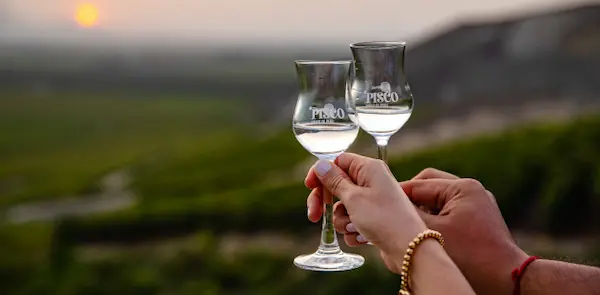
Recommendations: To fully appreciate Pisco, experts recommend using the Pisco glass, designed in a tulip shape to highlight its aroma and enhance the first contact with the palate. This maximizes the experience of Pisco and its complex flavors.
Why Peruvian Pisco is a must-try drink
Peruvian pisco is probably the most delicious drink in the world. From the moment we feel that burning sensation in our throats, whether enjoying a refreshing pisco sour, savoring it on its own, or discovering it in a cocktail, pisco captures the soul of our country. It’s a beverage that unites all of us, Peruvians and tourists alike, and makes an enduring impression on those who partake. The next time you sip on a glass of this amazing elixir, remember that you are not only tasting a magnificent spirit but also experiencing the very essence of Peru.
