

The ancient traditions of Peru are a living testimony of how civilizations can endure in memory and practice despite the passage of centuries. They are not merely remnants of history but elements that continue to shape social identity, community life, and cultural pride. For historians, anthropologists, and travelers alike, the ancient traditions of Peru offer a unique opportunity to understand how people related to their environment, to each other, and to the divine.
Unlike many societies where traditions were absorbed or completely erased by colonization, in Peru they remain strikingly visible. Festivals, rituals, textiles, and community practices still reflect ideas and values developed long before European contact. This resilience demonstrates the strength of Peruvian ancient cultures and their ability to transmit knowledge across generations.
The history and culture of Peru show us that traditions were not isolated activities but part of an integrated worldview. Every act from planting crops to weaving textiles carried spiritual and symbolic significance. When we speak of the ancient traditions of Peru, we are speaking of a worldview where life, nature, and the cosmos formed a single interconnected system.
You might be interested: Traditions of Peru: Culture, Celebrations and History
Origins and Legacy of Ancient Traditions of Peru
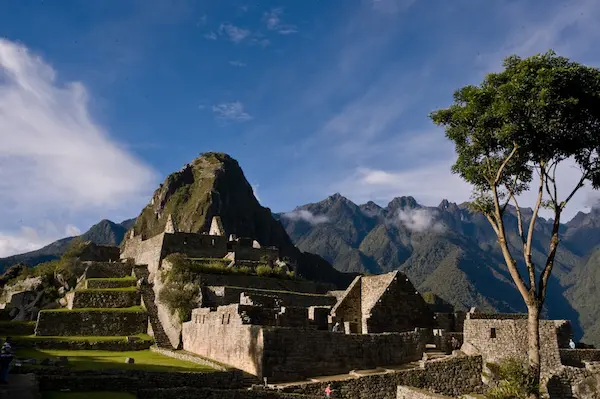
The origins of the ancient traditions of Peru stretch back thousands of years. Archaeological evidence from sites such as Caral, dating to around 3000 BCE, indicates the presence of organized societies long before the Inca Empire. These communities developed architectural, agricultural, and religious practices that shaped later cultures.
The Chavín culture (900–200 BCE) was especially influential. At its ceremonial center in Chavín de Huántar, priests used hallucinogenic plants to enter altered states of consciousness and communicate with the divine. The imagery of jaguars, snakes, and eagles found in stone carvings reflected a belief in transformation and duality. These ideas became embedded in the ancient traditions of Peru, reappearing in later civilizations.
The Moche (100–700 CE) left a vivid record through ceramics, murals, and monumental architecture. Their depictions of warriors, rituals, and sacrifices reveal a society where religion and politics were inseparable. The Nazca, meanwhile, created immense geoglyphs in the desert that still puzzle scholars today. These figures—spiders, monkeys, hummingbirds—likely functioned as offerings to deities related to water and fertility.
The Inca Empire (1438–1533 CE) inherited and systematized many of these practices, creating a unified structure of beliefs and traditions across their vast territory. Thus, when we refer to the ancient traditions of Peru, we are not speaking of a single homogeneous system but of a tapestry woven by numerous cultures over millennia.
Rituals and Beliefs in the Andes
Rituals formed the heart of Andean spirituality. The ancient traditions of Peru emphasized reciprocity with natural forces, a principle known as ayni. This idea held that humans, animals, plants, and deities all shared responsibility in maintaining balance.
One of the most important rituals was the offering to Pachamama. Farmers buried coca leaves, chicha, or small figurines in the earth before sowing crops, asking for fertility and protection. Similar rituals were performed during harvest, ensuring gratitude for abundance. These ceremonies are still practiced today, showing the deep continuity of Andean traditions.
Another major belief centered on the Apus, the sacred mountains. Each community recognized a particular mountain as its protector and offered sacrifices of llamas, textiles, and food to secure its favor. The connection to mountains highlights how the ancient traditions of Peru integrated geography into religion, making the landscape itself a participant in cultural life.
The worship of the sun, Inti, also reveals how cosmology structured social order. The Inca emperor, or Sapa Inca, was considered the “Son of the Sun,” granting him divine authority. Ceremonies like Inti Raymi celebrated the winter solstice, reinforcing political power while honoring spiritual forces.
You might be interested: Peruvian Culture: Traditions, History and Modern Life

Festivals Preserving the Ancient Traditions of Peru
Festivals are perhaps the most visible link between past and present. They allow us to witness how the ancient traditions of Peru survive, not in museums but in the streets, plazas, and mountains.
The Qoyllur Rit’i pilgrimage is a prime example. Thousands of people gather near the Ausangate glacier, carrying crosses and performing dances that echo ancient fertility rituals. Though Catholic symbols are present, the underlying logic remains distinctly Andean: honoring the mountains, renewing community ties, and seeking protection for agricultural cycles.
In Puno, the Festival of the Virgin of Candelaria combines Catholic devotion with dances rooted in pre-Hispanic rituals. Costumes depicting devils, condors, and mythological beings recreate narratives that stretch back to Peruvian ancient cultures.
Carnivals in regions like Cajamarca also preserve fertility rites disguised as playful games. Water fights, dances, and symbolic marriages recall agricultural rituals once meant to secure rains and harvests. Through these festivals, the ancient traditions of Peru demonstrate their adaptability and vitality.
Traditional Peruvian Jewelry and Symbolism
Material culture provides another window into the ancient traditions of Peru. Traditional Peruvian jewelry exemplifies how art, power, and spirituality converged in Andean societies.
Gold and silver were not valued for their economic worth but for their symbolic meanings. Gold embodied the sun and masculine energy, while silver represented the moon and feminine energy. Worn together, they expressed cosmic duality.
Moche artisans produced intricate nose rings, ear spools, and breastplates that identified elites and priests. These items often depicted animals like owls, jaguars, or serpents, each carrying spiritual significance. Jewelry thus functioned as both decoration and sacred object.
In the Inca period, jewelry became highly regulated, with certain ornaments reserved for nobles. Common people wore simpler pieces made from copper, bronze, or beads, yet even these carried symbolic weight.
Today, Peruvian artisans continue to reproduce ancient designs, ensuring that traditional Peruvian jewelry remains a tangible link to the past. By studying these artifacts, we understand not only aesthetics but also the spiritual logic of the ancient traditions of Peru.
Daily Life Practices Rooted in the History and Culture of Peru
Everyday practices also reflected the history and culture of Peru. Cooking, farming, and healing were infused with ritual meaning, demonstrating that traditions were embedded in the very structure of life.
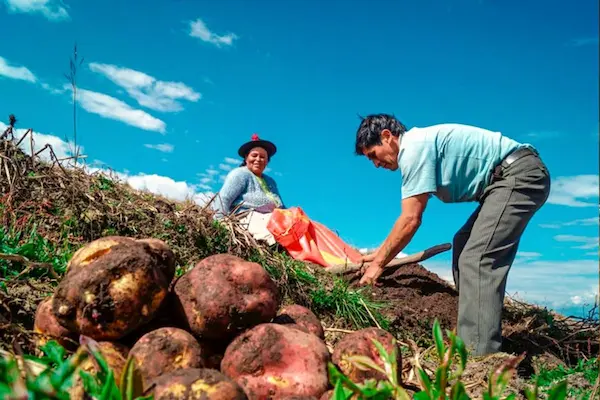
Agriculture, for example, was organized communally. Fields were divided among families but cultivated through collective labor. Planting ceremonies involved music, dancing, and offerings to ensure fertility. The diversity of crops over 3,000 varieties of potatoes alone illustrates both ecological adaptation and cultural significance.
Food preparation also carried meaning. Dishes like pachamanca, in which meats and tubers are cooked underground with hot stones, were linked to fertility rituals and communal feasts. Even today, the method reflects ancient techniques and cosmological symbolism.
Medicine relied on plants like coca, revered for its ability to energize and heal, and ayahuasca, used in shamanic ceremonies to connect with spiritual realms. These practices, still common in rural areas, embody the survival of the ancient traditions of Peru in daily life.
Oral Traditions and Storytelling in Peruvian Ancient Cultures
Without written records, oral traditions became the primary medium for transmitting values and history. Legends, songs, and myths formed the cultural memory of Peruvian ancient cultures.
Stories often explained the origins of communities, natural phenomena, or moral principles. The Inca myth of Manco Cápac and Mama Ocllo described how civilization began at Lake Titicaca, legitimizing Cusco as the center of the empire. Other tales, like those of the fox or condor, carried ethical lessons about humility, respect, and balance.
Storytelling was not entertainment but education. It ensured that the ancient traditions of Peru survived across generations, even when external pressures threatened them. Today, Andean communities continue to tell these stories, keeping alive the voices of their ancestors.
You might be interested: How to Prepare for a Multi-Day Trek – Gear, Training, and Survival Tips
Agriculture as a Pillar of Ancient Traditions of Peru
Agriculture was more than survival it was the foundation of the ancient traditions of Peru. The domestication of potatoes, maize, and quinoa transformed global diets, yet in the Andes these crops also had spiritual roles.
Before planting, rituals invoked Pachamama and the Apus, asking for fertile soil and favorable weather. Harvest festivals expressed gratitude for abundance. In both cases, agriculture was framed as a reciprocal relationship with nature.
Technological innovations also reflected cultural values. Andenes (terraces) conserved soil and water, while waru-waru (raised fields) prevented flooding. These methods illustrate how Peruvian ancient cultures achieved sustainability in fragile ecosystems. Their legacy remains evident today, as some farmers still use these techniques.
Thus, agriculture demonstrates the practicality and spirituality of the ancient traditions of Peru, offering lessons for modern food security and environmental balance.
Artistic Expressions in the History and Culture of Peru
Art was not separate from life; it was a medium for transmitting values and cosmology. Pottery, textiles, and monumental architecture were all expressions of the history and culture of Peru.
Moche ceramics depict everything from daily activities to mythological scenes, providing insights into social structures and religious practices. Nazca textiles, renowned for their vibrant colors and geometric patterns, communicated identities and beliefs.
The Incas elevated architecture to a spiritual art. Sites like Machu Picchu were built in harmony with mountains and rivers, reflecting the Andean principle of integration with nature. Stones were carefully fitted without mortar, symbolizing permanence and order.
By analyzing these artistic forms, we see how the ancient traditions of Peru transformed aesthetic creativity into cultural memory.
The Role of Community in Preserving Ancient Traditions of Peru
The concept of ayllu, or kin-based community, illustrates the social foundation of Andean life. Each ayllu shared land, labor, and rituals, embodying the principle of reciprocity.
Collective work projects, or minka, were essential for building terraces, canals, and temples. These activities reinforced social bonds while achieving large-scale goals. Even today, minka remains a practice in rural areas, reflecting the persistence of the ancient traditions of Peru.
Festivals and rituals also strengthened community identity. By participating in collective ceremonies, individuals reaffirmed their belonging and responsibility to the group. This communal orientation remains one of the most powerful legacies of Andean societies.
Modern Relevance of Ancient Traditions of Peru
In the modern era, the ancient traditions of Peru have gained renewed importance. They serve not only as cultural heritage but also as resources for sustainable development and national identity.
Educational programs increasingly incorporate indigenous knowledge, recognizing its value in agriculture, ecology, and medicine. Artisans preserve ancient weaving and jewelry techniques, adapting them to contemporary markets while maintaining authenticity.
International interest in Andean traditions has also grown, with researchers, artists, and cultural enthusiasts finding inspiration in Peruvian ancient cultures. Yet the challenge remains to protect these traditions from exploitation or superficial representation.
Ultimately, the ancient traditions of Peru remind us that the past is not separate from the present. They provide practical wisdom for ecological balance, social harmony, and cultural pride values urgently needed in today’s world.
Conclusion
The ancient traditions of Peru are more than historical curiosities. They are the living heritage of Peruvian ancient cultures, encompassing rituals, festivals, art, agriculture, and oral traditions that continue to influence modern life. From the symbolism of traditional Peruvian jewelry to the wisdom embedded in the history and culture of Peru, these traditions illustrate a worldview where community, nature, and spirituality are inseparable.
By studying, practicing, and preserving the ancient traditions of Peru, we honor the resilience of Andean civilizations while learning timeless lessons for the future. Their survival demonstrates that culture is not static but dynamic—capable of adapting while preserving its essence.
The legacy of these traditions challenges us to rethink modern values, inviting us to embrace reciprocity, respect for nature, and communal solidarity. In this way, the ancient traditions of Peru remain a powerful force shaping both national identity and global cultural heritage.
